Teleos EarthThe case
The problem, evidencedSources at foot
Permission is the scarce input.
Demand is not the issue and capital is not the issue. The wall the build-out has run into is the county board, and no one has given it a way to say yes.
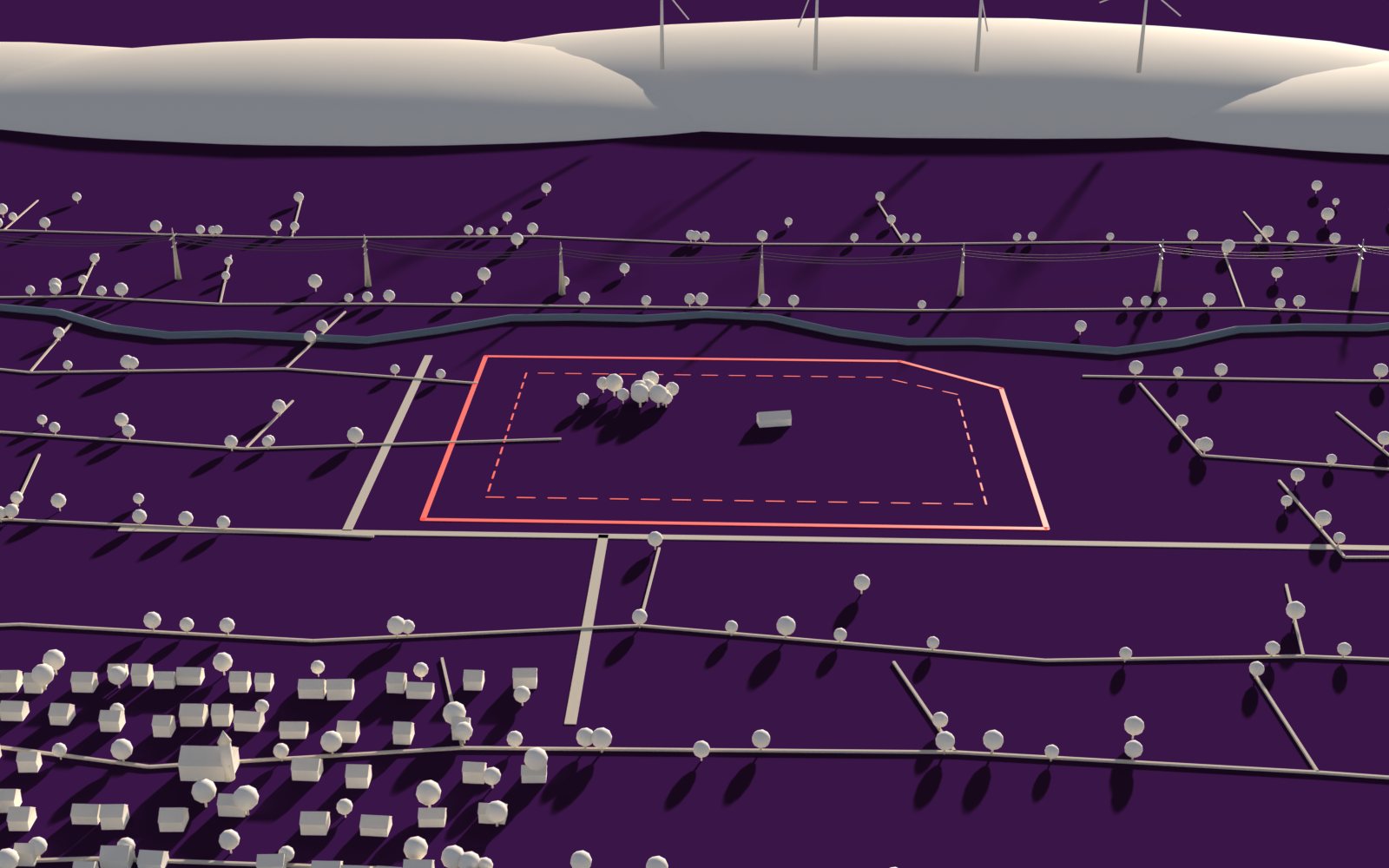
Demand and capital are not the issue.
Global data-centre demand is projected to nearly triple, from 82 gigawatts in 2025 to 220 by 2030. North American absorption reached 25 gigawatts in the first half of 2026, double a year earlier; more than 66 gigawatts are under construction; vacancy is about one per cent. The disclosed United States pipeline exceeds 430 gigawatts.
The money is there. Blackstone bought AirTrunk for $16 billion. BlackRock’s GIP, MGX and the AI Infrastructure Partnership bought Aligned for $40 billion. MGX closed a $49 billion AI fund in July 2026. Hyperscaler capital spending guided for 2026 is roughly $720 to $745 billion, and $6.7 trillion is projected to 2030.
Permission is.
| What | Number | Source |
|---|---|---|
| Americans who oppose an AI data centre in their area; who oppose strongly | 70%; 48% | Gallup, March 2026 |
| Views of data centres since January 2026 | More negative | Pew Research Center, September 2026 |
| Political advertisements against data centres, against those for | 64 to 6 | Research note 03 |
| States with at least one active local moratorium; moratoria adopted in 2026 | 40; 94 | Data Center Watch |
| Projects blocked or delayed in the first quarter of 2026 | $130 billion | Data Center Watch |
| The House vote on the Ratepayer Protection Act | 417 to 3 | Research note 03 |
| Data-centre laws enacted in Virginia in 2026 | Nine | Research note 03 |
| Share of subscribed capacity a large load must pay for in AEP Ohio territory, and for how long | 85%, up to 12 years | Ohio Public Utilities Commission |
| Loudoun County, the largest data-centre market on earth, ended by-right approval | March 2025 | Research note 03 |
| The Prince William Digital Gateway rezoning, voided in court | $24.7 billion | Research note 03 |
| Bring-your-own-power with gas turbines, now a Clean Air Act lawsuit | xAI, Memphis | Research notes 03 and 04 |
Opponents cite water, energy, pollution and noise. Every one of those is a measurable thing a permit can condition. The counties that said yes this year did so on numbers: a decibel limit at the fence, a gallon count, a share of clean power, a tariff that keeps the cost off the neighbours. We adopt those numbers rather than inventing softer ones.
The floor Europe is laying.
On 21 September 2026 the European Commission proposed a mandatory sustainability label for every data centre of 500 kilowatts or more, annual from August 2027, rating resource-use effectiveness, energy sources and heat reuse. It does not rate minerals, remediation or community permission. The United States has no floor at all. The Standard’s Transitional tier begins where the European label’s top band ends.
What a year costs.
A 100 megawatt campus built to 2026 costs earns on the order of $129 million a year once it is running. A year of permitting delay forgoes that year and carries the land and the capital through it: about $160 million per campus-year, computed from the inputs in the research notes (capital cost per megawatt from Cushman & Wakefield’s 2026 guide, rents from CBRE, margins from the listed operators’ filings). A standard a county trusts is worth that, per campus, per year. That is why Teleos exists.
A permitting instrument, not a label.
Every sustainability mark in this industry was written for investors: reliability tiers, a European operators’ pact, a carbon accounting accord. None is written to be read by the county board that blocked $14 billion in Goodyear, Arizona. None scores water as a county measures it, or asks who pays for the substation, or requires the developer’s name on the application. The Standard does those things. Teleos is the company that builds to it first, and puts its name on the form.
A standard that arrives before the moratoria harden into law is what the moratoria make an exception for.
Sources
The figures on this page are drawn from the six research notes behind Teleos’s plan, about 140 sources in all, summarised on the Notes page. Named sources: Gallup (March 2026); Pew Research Center (September 2026); Data Center Watch (2026); the European Commission’s proposal of 21 September 2026; Cushman & Wakefield, Data Center Development Cost Guide (2026); CBRE, North America data-centre trends (H1 2026); the Public Utilities Commission of Ohio. Computed figures are computed from those inputs and say so.
Nothing on this page is an offer of securities or a forecast of Teleos’s results. Market figures are third parties’, as dated.